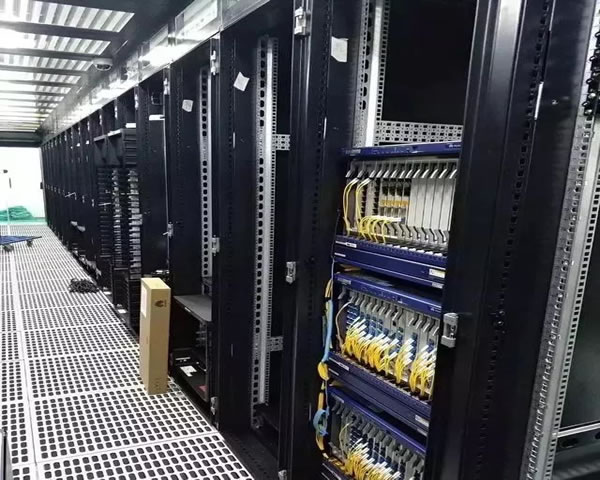
introduction: this article is intended for teams preparing to carry out server development or deployment in vietnam, and systematically sorts out the project process and key considerations from requirements to operation and maintenance. the content takes into account both technology and compliance, and is suitable for development and operation and maintenance personnel who want to stably launch business in the vietnamese market.
project preparation and requirements analysis
before starting a server development project in vietnam, you should first clarify your business goals, traffic estimates, data sovereignty and compliance requirements. compare local access latency, target user distribution, and peak concurrency to formulate performance, availability, and recovery time objectives (rpo/rto). clarifying requirements reduces the risk of subsequent changes and guides vendor and architecture selection.
select vietnam server type and provider
when choosing a server, there are trade-offs between bare metal, virtual machines, and public cloud instances. evaluate the supplier's network interconnection capabilities, local support, contract flexibility, and data information security measures. priority will be given to partners that have local computer rooms or nodes in vietnam and can meet compliance audit and technical support slas.
network and bandwidth planning
network planning covers external network egress bandwidth, internal network topology and cross-regional links. determine cdn acceleration and edge node layout based on access sources, and plan bgp routing and redundant links to reduce packet loss and delay. bandwidth and access controls need to match cost targets and traffic growth curves.
deployment architecture design
the deployment architecture should support horizontal scalability and fault isolation. common patterns include front-end load balancing, application layer containerization, and back-end database master-slave or sharding solutions. the design considers multi-availability zone deployment, health checks, and auto-scaling strategies to improve availability and elasticity.
security compliance and data sovereignty
vietnam has specific compliance requirements for data storage and transmission. projects need to comply with local laws and implement data encryption, access control and log retention. deploy firewalls, wafs, intrusion detection and least privilege policies, and conduct regular security assessments and patch management to ensure compliance and risk control.
development and environment configuration
during the development phase, environment configuration and dependency management should be unified, and containers or mirrors should be used to build a standardized operating environment. maintain the consistency of development, testing and production environments, use configuration management tools to manage secrets and environment variables, and reduce problems and online risks caused by environmental differences.
continuous integration and automated deployment
establish a ci/cd pipeline to achieve code verification, automated testing and seamless deployment. the pipeline should include static code scanning, unit and integration testing, image building and grayscale release strategies. automatic rollback and blue-green deployment can reduce the impact of version releases.
monitoring and log management
the complete monitoring system covers availability, performance and business indicators, and sets up alarm and event response processes. centralized log collection and analysis helps fault location and security auditing. it is recommended to combine application tracking, indicator aggregation and alarm classification to improve operation and maintenance efficiency.
performance optimization and disaster recovery
performance optimization takes comprehensive consideration from code, database to network layer, and uses caching, read-write separation and asynchronous processing to relieve pressure. develop a disaster recovery plan that includes multi-availability zone redundancy, regular backups, and drills. verify capacity planning and bottleneck location through stress testing.
operation and maintenance and cost control
operation and maintenance requires standardized processes, documents and permissions management, combined with automated scripts to reduce manual operations. cost control is achieved through regular resource audits, idle resource recycling, and on-demand expansion and contraction. use observable indicators to evaluate cost-effectiveness and continuously optimize resource utilization.
project delivery and knowledge transfer
during the delivery phase, deployment documents, operation manuals and emergency plans must be completed, and handover training and drills must be conducted. establish a knowledge base and version records to ensure that the operation and maintenance team can independently handle common faults, reduce long-term dependence on external support, and facilitate stable project operation.
summary and suggestions
a vietnam server development project from scratch needs to run through requirements, selection, architecture, security, development, automation, monitoring and operation and maintenance. it is recommended to conduct a small-scale pilot first to verify the feasibility of network and compliance, and then gradually expand. adhering to standardization and automation, and focusing on security and observability will significantly reduce online risks and improve long-term maintainability.
- Latest articles
- How To Achieve Stable Operation Even If There Is A Cheap Thailand Vps Through Configuration Tailoring
- Why Do E-commerce Websites Prefer High-defense Servers In California, USA, To Protect Against Traffic Impact?
- Technical Guide: How Can Newbies Quickly Test And Go Online With Singapore Cn2 Direct Connection?
- Recommended Vps Cambodia Images And Automated Deployment Templates For Developers
- Zelda Scheduled Hong Kong Server And Local Server Delay Comparison And Selection Suggestions
- Japanese Cloud Server Download And Migration Practical Guide In Offline Installation Scenario
- Comparing The Specific Requirements For German Independent Servers On The Capabilities Of Operation And Maintenance Teams From Hosting To Self-management
- Network Diagnosis Method For Vietnam Server Cf Game Commentary In A Cross-border Battle Scenario
- Comparison Of Performance Of Japanese Cn2 Lines In Operator Interconnection In Different Regions
- Are There Cloud Servers In Taiwan? Latest Market Supply And Purchase Channel Inventory
- Popular tags
-

Operators Compare The Line Quality And Packet Loss Rate Evaluation Report Of Vietnam's Native Ip Nodes
this report carries out a systematic evaluation of the line quality and packet loss rate of vietnam's native ip nodes, compares the delay, packet loss and jitter performance of multiple operators in different scenarios, and puts forward optimization and selection suggestions. -
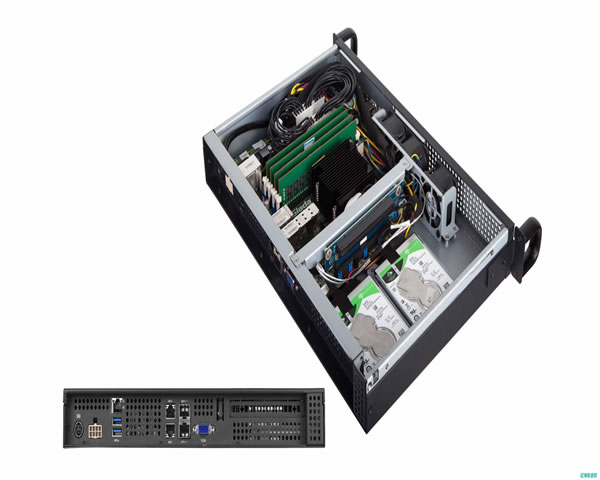
Performance Comparison Of Vietnam's Native Ip Vps And Cloud Host In Terms Of Delay Stability, Actual Measurement Conclusion
based on comparative testing, we analyze performance and compare the actual measurement results of vietnam's native ip vps and cloud hosts in terms of latency stability, including test methods, network topology effects, respective advantages and optimization suggestions, to help make choices when deploying services in vietnam and surrounding areas. -

Analysis Of Alibaba Cloud's Cloud Server Solution In Vietnam
A deep analysis of Alibaba Cloud's cloud server solutions in Vietnam, discuss its advantages, functions and applications, and help enterprises transform digitally.